
Building Bollingen Tower
A Tiny Attention Span Experiment
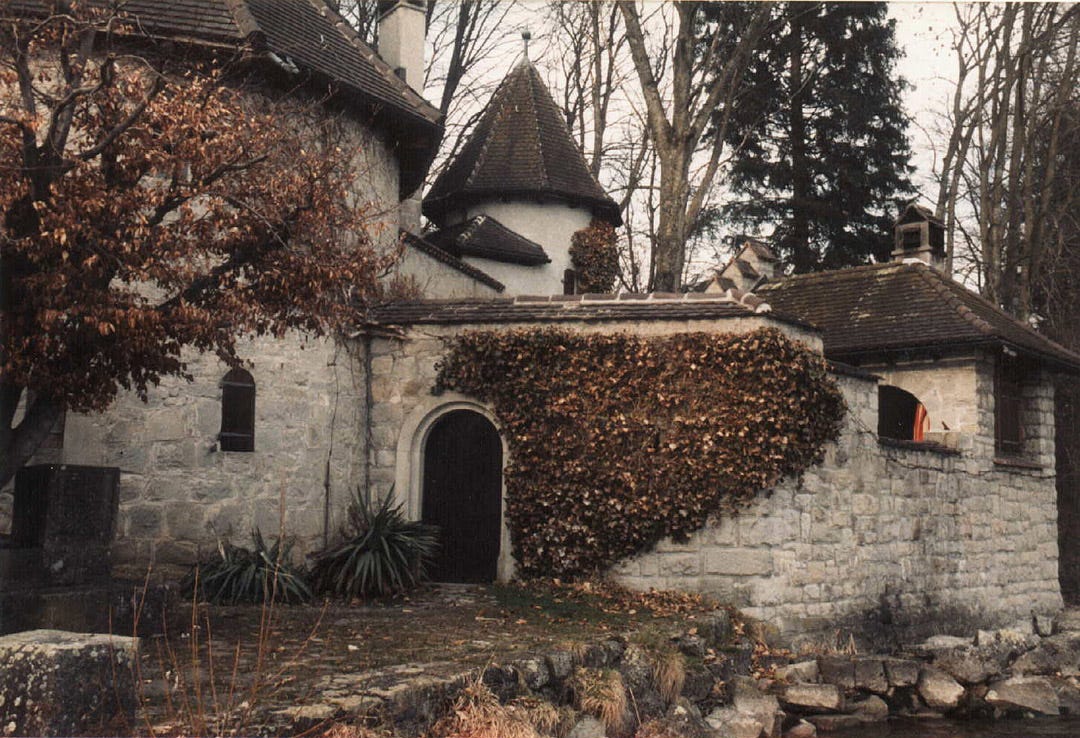

On February 3, 2026, I quit social media1.
To preface, I’ve always hated notifications on my digital devices. My settings ensure that I get as few pings and vibrations as possible. The only social media platform I’ve used consistently since 2014 is Instagram. So when I say I quit social media, I “only” had to quit Instagram.
I got inspired by Rachael Stephen using a dumbphone for one month to fix her attention span and sharing the experience on her Patreon. That video came at exactly the right time for me. As I was working on my dark fantasy novel, I realised that I’d somehow lost the habit of writing for long stretches of time. I also suspect—although I haven’t actually confirmed it—that my scenes tend to be shorter now than they were before. This could simply mean that my writing has gotten more concise but it could also mean that my attention span has gotten worse. If it’s the latter, I want to do something about it.
The Potential Value
Why is it important to be able to focus for long stretches of time? As a writer, if I want to produce a novel, I have to sit down to write consistently. The more I can work on it, the better. However, it’s not only writers who should value deep work. In A World Without Email, Cal Newport argues that it’s important for all knowledge workers.
For many different knowledge work positions–if not most–the ability to slow down, tackle things sequentially, and give each task uninterrupted attention is crucial, even if the role doesn’t regularly require hours of continuous deep thinking.
In his other book Deep Work, Newport notes that the value of deep work is hardly recognised in modern knowledge work, instead office workers are forced to use not only email but one or more chat messaging apps as means of communication. Often managers expect them to be available at all times, which encourages shallow work and pseudo-productivity2.
A 2012 McKinsey study found that the average knowledge worker now spends more than 60 percent of the workweek engaged in electronic communication and Internet searching, with close to 30 percent of a worker’s time dedicated to reading and answering e-mail alone.
Obviously, my work time is dictated by others but in my free time, I want to focus on fixing my attention span and doing deep work.
The Experiment
In the spirit of Tiny Experiments by Anne-Laure Le Cunff, I decided to do a little experiment to help with that goal: I resolved to quit Instagram, my main tool of doom-scrolling, and reduce screen time in general. Instead, I wanted to engage in more physical activities such as going for walks, sketching, and reading physical books.
I started the experiment on February 3 and planned to continue at least until March 3.
The fine print:
No Instagram on my phone. I decided I could open it on my computer to look at specific accounts or post pictures but not to scroll aimlessly.
Put the phone in a dedicated spot when getting home and leave it there, instead of always having it with me. Mainly I wanted to stop looking at my phone first thing in the morning, checking messages and scrolling before even getting up, which often affected my mood for the rest of the morning, if not the entire day.
Engage more in physical activities. In addition to work, my favourite leisure activities are also digital so I resolved to intentionally engage in more physical activities such as moving my body, going for walks, handwriting, sketching, reading physical books etc.
In a nutshell, I wanted to reduce not only social media use but context switching in general and see what it did to my attention span.
The Results
I was pretty good with this and hardly looked at Instagram even on my computer. I only opened it a few times to message friends. When I couldn’t help but scroll after taking care of messages, I always managed to stop quickly.
Point two is going reasonably well. I started using an alarm clock so I don’t have to pick up my phone first thing in the morning to turn off the alarm. I still tend to slip and take my phone with me whenever I don’t think about it. As a physical habit, this definitely requires more effort to break once and for all.
The third point is the only one that I feel I failed. I’m going for more walks and reading more physical books rather than ebooks but there’s still room to grow. I hope to work on this more in the future although I’m not yet sure how.
Thoughts
Only a few days into the experiment, I already felt different: more anchored in the real world. My thoughts felt clearer, less cluttered with random bits and pieces I’d seen or read online that day. I hadn’t realised how noisy my head was until I removed the source of that noise.
Most of my colleagues and friends narrate their daily life via Insta stories and the occasional post. At first I was sad to lose that constant stream of life updates. I felt more alone but also more myself. Slow and quiet activities such as reading books and listening to music felt more enjoyable, especially because I didn’t have my phone as potential distraction next to me.
It was a powerful reminder that social media, especially visual platforms such as Instagram, make you observe yourself from the outside at all times—engineering the perfect snapshot, curating your life to fit your chosen image or aesthetic, commenting on and criticising everything you do through that lens. Unlike a social media profile, life is inherently chaotic and humans too multi-faceted to stuff into two or three neat categories.
Most importantly, though, I can hear myself think again.
There are some things I was using Instagram for that are harder to replace: recommendations for weekend activities, in-person events to attend, and book recommendations. For example, a few months before I quit, I started following an bookseller of English books who organised pop-up bookstores and events for readers in Japan. The only places where she posts her event information are her website and Instagram.
I see myself relying more on email newsletters, local magazines such as Tokyo Weekender, or searching online whenever I’m in the mood for a specific event type.
As for book recommendations, luckily Instagram was never my only source. I will keep picking up books recommended by fellow Substackers and Youtubers3. There’s always word-of-mouth, as I’m fortunate enough to have book lovers with similar reading tastes in my life. Lastly, something I always wanted to do more is follow threads of inspiration and influence from one author to the next. Reading Lovecraft, I was amazed at how freely he name-drops his influences right in his stories and became interested (or more interested) in E.A. Poe, Lord Dunsany, and Arthur Machen. Since then, I have picked up a slim, Japan-published volume of Poe’s works and am hoping to read Lord Dunsany’s The King of Elfland’s Daughter soon.
Conclusion and Future Ideas
After this month-long experiment, I can say with confidence that the benefits far outweigh the drawbacks for me. In fact, I had gotten so used to my new habits that I didn’t even notice when March 3 rolled around and I could’ve stopped.
I’ve always admired artists and other professionals with famous deep work habits. Mason Currey describes many in his book Daily Rituals. The one I always remember is C.G. Jung because Cal Newport mentions his deep work retreats at Bollingen Tower in the introduction of Deep Work4.
As a writer, I want to protect and hone my ability to think deeply. Sometimes I lose sight of how important this is—which is only natural, I’m a fallible human, after all. This experiment has reminded me of what’s most important to me and helped me get back on track.
Not only that, it has raised more questions. In some ways, I always thought I was more of a flitting butterfly creative, a sprinter rather than a marathon runner, but am I really? What would happen to my attention span if I adopted even more deep work habits?
For example, what if I limited or removed internet access for even fewer distractions? What would happen if I went offline to write5, only using the internet during dedicated research blocks? Some might think it extreme but I firmly believe in having extraordinary experiences to create extraordinary art. And in the grand scheme of things, hitting that airplane button is a small price to pay for the wonderful stories I hope to create.
I’m still building my personal Bollingen Tower. What would yours look like?
Does Substack count? I don’t use Notes a lot so it doesn’t feel like social media to me.
In my day job, I have to use Google chat and comments on Trello cards in addition to email, and am supposed to reply to chat messages within one hour.
Is Youtube social media? It feels more like TV to me.
This book has had a huge impact on me. Reading it led me to optimise my freelance work habits so I could spend more time doing what I loved: writing, reading, and going for walks. I still believe Cal Newport is the best “productivity guru” out there because what he teaches is not a superficial promise to cram more work into your waking hours but a holistic system for creating a life that is both healthy and meaningful.
There was a time when I dreamed of getting a typewriter, before I learned how loud they are.
Enjoyed this a lot, Vanessa! I’ve noticed so much in other people the way their attention span is gone…. I noticed the way when I try to have conversations especially with Americans and especially with younger Americans in about 30 seconds they start glazing over or distracted and I also can help but it is how often they are looking at their phones. In myself, what really scares me is that I feel like I become depressed —anxiety spread on social media, but for me for whatever reason it causes me to go into a kind of depression… I’m really scared that I read. I get very antsy to look or scroll on Facebook. It’s actually scary to me that I am still reading on the order of 100 books a year, but it’s not sustained reading and there’s a lot of books that I don’t finish now, which never used to happen to me… like I just can’t stick with it. I always keep my phone on me because I wanna be able to contact my son or if he needs me I just always want to be there, but that’s also kind of anxiety. I’m constantly waiting for rejections or things from these submissions. I do, but I really want to limit my time on social media, the best thing I ever did was taking it off my phone and only checking from the computer and my rule was it had to be after 3 PM but I just couldn’t stick with it …. This is a really long message, but it really resonated with me. What you said because I’m feeling like I need to do something..